
What Grant County Tax Records Actually Measure
Grant County property tax records answer two different questions. The Assessor's layer sets the parcel's appraised and assessed values, its classification, and any exemptions it qualifies for. The Sheriff Tax Office issues the ticket, the amount due, the tax year, and the paid or unpaid status. One layer explains taxable value. The other shows the bill and collection. A tax record supports reviewing an assessment or confirming payment, but it is not the conveyance document.
| Field | What It Shows | Where |
|---|---|---|
| Appraised value | Assessor's full-value estimate | WV Property Assessment |
| Assessed value | 60 percent of appraised value | Assessor roll |
| Class / exemption | Tax category and any approved relief | Assessor |
| Ticket / tax year | Amount billed for a stated year | Sheriff Tax Office |
| Paid / unpaid status | Collection status for the ticket | Sheriff or State Auditor |
West Virginia figures assessed value at 60 percent of appraised value. The levy rate then applies to that assessed amount. A last sale price is separate. It appears in a deed or a sale field, not in the tax math. An exemption can lower the taxable amount without touching the appraised value, and the tax bill reflects only the current ticket and its charges, not what the parcel would sell for today.
Grant County Assessment Starts on July 1
West Virginia fixes ownership, use, and value every July 1. That snapshot governs the next calendar tax year. Assessment books close by January 30. The Board of Review and Equalization receives them by February 1. In Grant County, the County Commission serves as that board. Each year the assessor updates land values, runs sales-ratio analysis, and logs transfers and improvements. So a figure on the tax roll reflects one assessment cycle, not the current sale market.
The math runs statewide. Appraised value drops to 60 percent for assessed value. The levy rate then produces the tax bill. Class II covers owner-occupied homes and farms. Class III applies to property outside a municipality that is not Class I or II. Class IV is the matching category inside town limits. Cross the town line and the class shifts, even for similar property.
The Assessor posts local duties at Grant County Assessor.
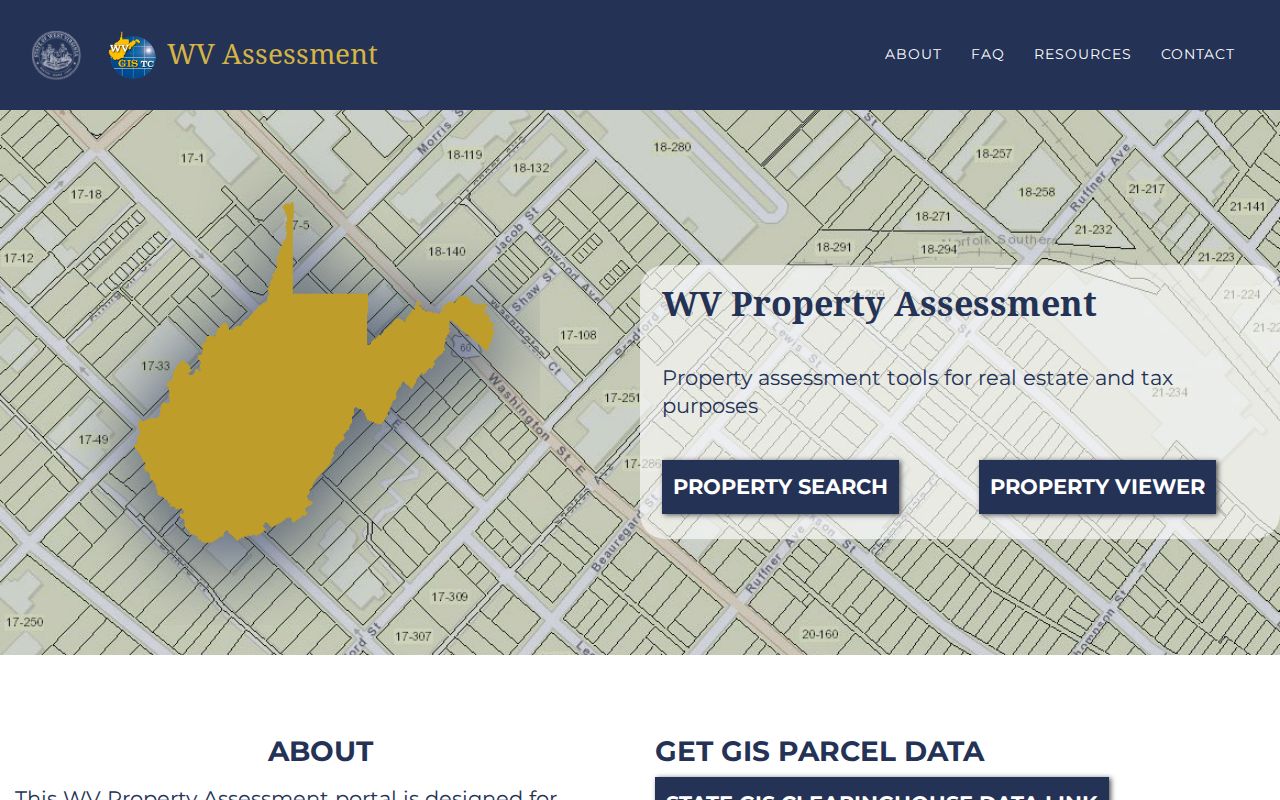
Open the WV assessment search to identify the value year, then check the separate Sheriff ticket. The two records answer different questions.
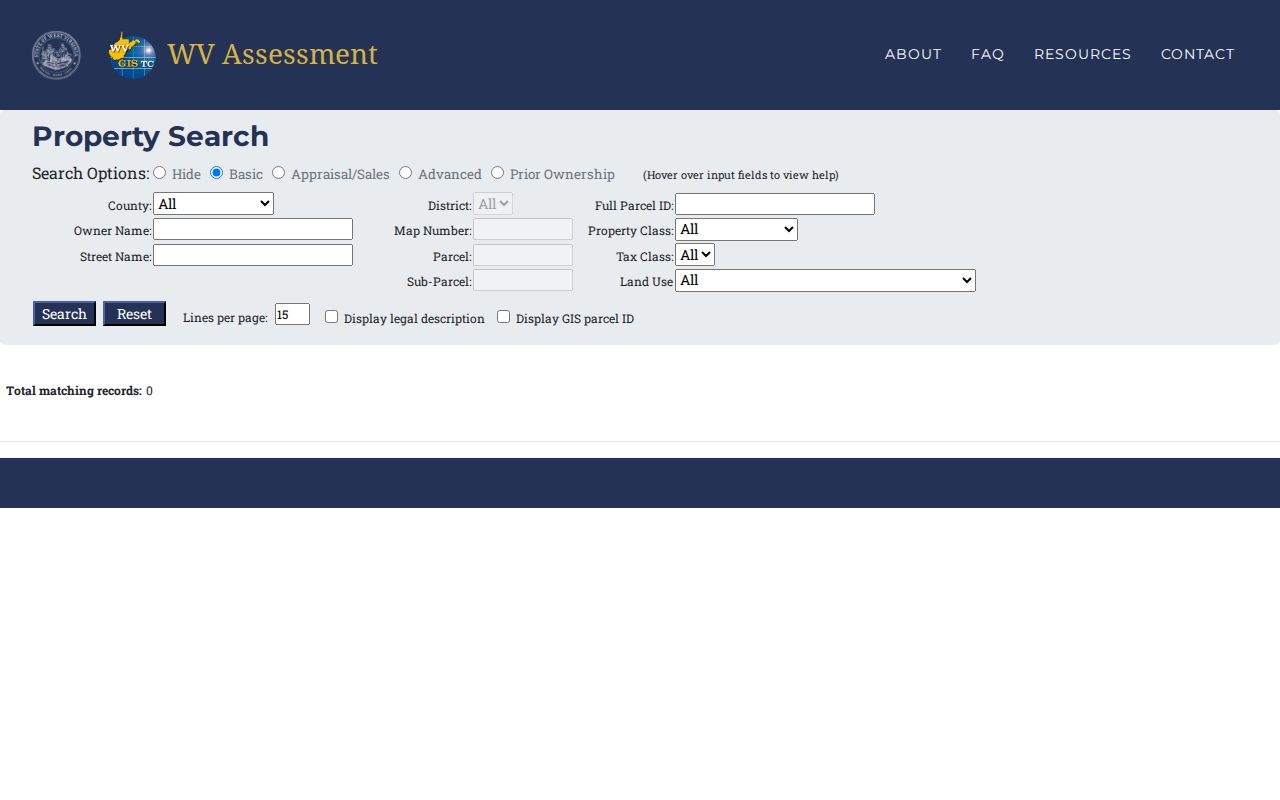
The amount due appears on the tax ticket, not the sale or appraisal fields.
Grant County Property Tax Search Controls
The Sheriff search offers four routes and several filters. Enter names last name first, and keep account entries to ten characters. Ticket numbers carry a one-character suffix. For a parcel lookup, pick the district first, then the dependent map, parcel, and subparcel fields.
| Control | Options or format | What it helps find |
|---|---|---|
| Taxpayer Name | Last name, then first | Tickets indexed to a name |
| Account / Ticket / Suffix | Account up to 10 characters; ticket and suffix separate | A known bill reference |
| District | Bayard, Grant, Milroy, Petersburg, Union | Local corporation or county map group |
| Map / Parcel / Sub-Parcel | Dependent dropdowns | A tax-map location |
| Tax Year, Real/Personal | Year; both, real, or personal | Separate year and property type |
| Paid / Unpaid | Both, paid, or unpaid | Collection status |
Four buttons drive the search: Search by Name, Search by Account, Search by Ticket, and Search by Map/Parcel. The form itself shows the fields clearly. What appears after submission can vary. The portal also links online payment, which carries a processor fee. Check the current balance before paying. The Grant County tax portal shows the live search routes.
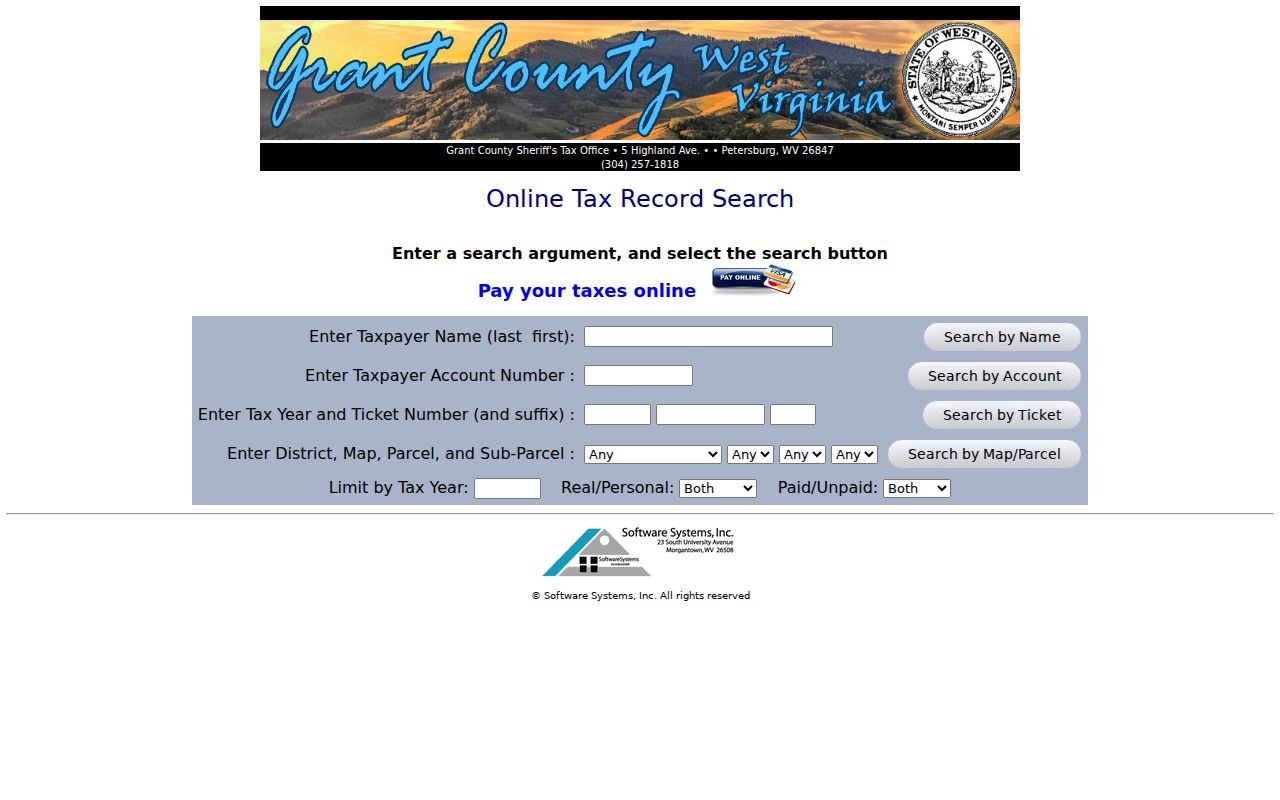
Choose a ticket or parcel route based on the reference printed on the bill.
Find a Grant County Tax Ticket
The Sheriff Tax Office sits on the courthouse lower level. It also posts an online search and payment link. You can search several ways. Choices include taxpayer name, account number, ticket and suffix, or map and parcel. Names go in last name first. A map search starts with one of five districts. It then loads the Map, Parcel, and Sub-Parcel fields. Tax year and real or personal property filters help separate a current bill from an older ticket.
- Choose name, account, ticket, or district/map/parcel based on the clue available.
- Set the tax year and real or personal category, then choose paid, unpaid, or both.
- Read the ticket and status, and use the online payment option only after checking the balance.
- Compare the taxpayer and mailing name with the latest deed and Assessor record.
- Assessed value
- Sixty percent of the Assessor's appraised value under the state formula.
- Levy
- The rate applied to assessed value to compute tax.
- Homestead exemption
- An eligible owner-occupied exemption applied to assessed value.
- Tax lien
- A claim tied to unpaid property taxes and the statutory collection process.
Grant County Tax Bills Follow Two Halves
The July bill covers either the first half or the full year. Grant County mails no separate second-half notice. That payment window opens March 1. Pay the first half by September 1 and earn a 2.5 percent discount. September 30 is the base amount deadline. After October 1, interest accrues at 0.75 percent monthly. The FAQ describes this as 9 percent a year.
Always check the current bill. Dates and amounts should be verified against the current-year bill and FAQ before payment. A ticket may also carry a different tax year or personal property. Verify the parcel and category before paying. The Sheriff Tax Office answers payment questions at 304-257-1818. The office is open weekdays from 8:30 a.m. to 4:30 p.m., except state holidays.
The official Grant County Tax FAQ explains discounts, due dates, and delinquencies.
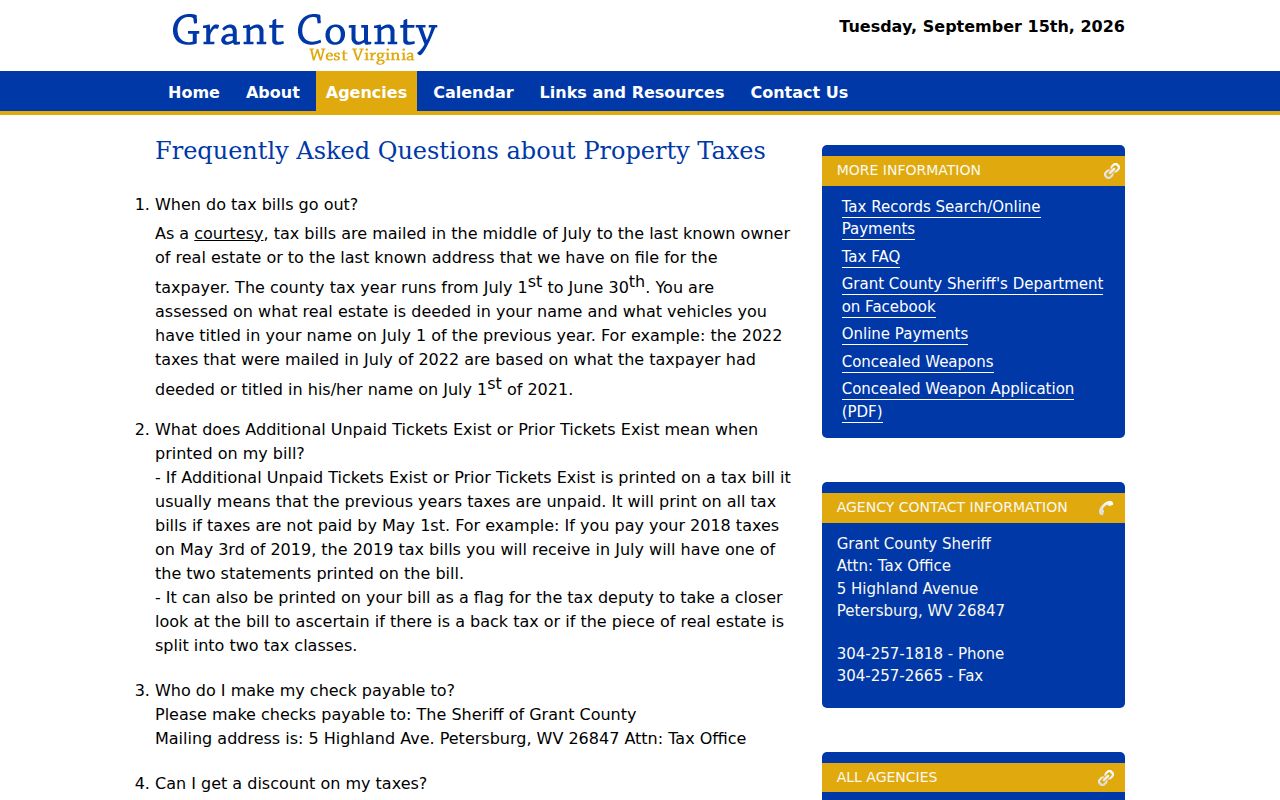
Use the FAQ with each year's current ticket.
Grant County Tax Records Can Name a Former Owner
A Grant County tax bill can keep printing a former owner's name long after a sale closes. The Sheriff FAQ explains why. The name stays on the ticket until the deed is filed and a copy reaches the Assessor, so treat the tax record as a collection document rather than a title record. The statewide Viewer updates annually. Its own warning says a fresh ownership change may lag behind the data.
A conflict has a fix. Pull the newest deed. Check its recording date and grantee against the tax year. The Assessor keeps the property roll. The Clerk holds the instrument. That filed deed is the more current paper trail for the transfer, though it is still not a title opinion. Use the Grant County property value page to read assessed, appraised, and sale figures separately.
A tax bill can also go to a mailing address apart from the physical parcel, so keep both in view when asking an office to correct a ticket or owner field.
Grant County Delinquent Taxes Move to the State
Real-estate taxes in Grant County turn delinquent April 1, the Sheriff Tax FAQ says. Names and amounts publish May 1, with fees. Certified letters go out the following September. They reach the last known or new owner.
SB 552 reshaped the 2025 procedure. Unpaid 2024 taxes went to the State Auditor at close of business October 31, ending the November courthouse tax-lien sale. Before certification, the Sheriff takes current bills, delinquent balances, and payments. Afterward the State Auditor handles certification, auctions, redemption, and unsold lands. Wait two weeks after November 1 for certified data to post, the Sheriff advises. The Auditor search is flexible. One field can be enough, drawn from tax year, county, district, map, parcel, subparcel, certificate, taxpayer, purchaser, bidder ID, ticket, account, description, or status. The statewide Viewer adds a delinquent-land layer. It updates weekly.
Search the West Virginia State Auditor county collections page for certified land.
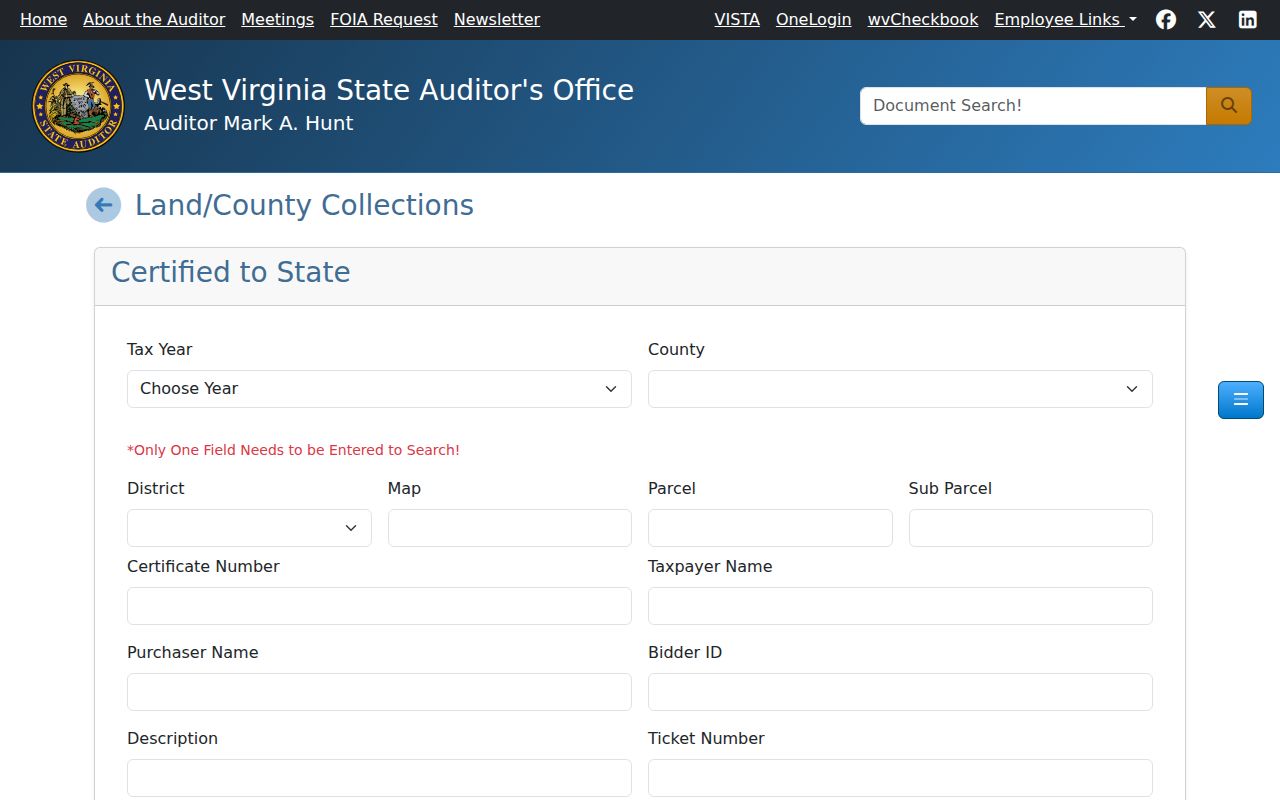
A certificate or sale result is only the start. Follow it into the later Clerk land record rather than assuming a search result completes title.
Appeal a Grant County Assessment in February
A Grant County owner who disputes assessed value can appear before the County Commission sitting as the Board of Review and Equalization. The state schedule starts the session February 1. The board may adjourn after February 15 but no later than February 28. That year's notice, filing address, and appeal form come from the Assessor or Commission.
Evidence matters at the hearing. Bring the parcel key and the displayed land and building values. Add facts that explain why the record needs review. A sale entry gives context, but it is not a current appraisal by itself. Keep the tax year clear. Keep the classification clear too. An assessed-value review is separate from a payment dispute. It is also separate from any fight over the deed's ownership language.
Appeal window. The February Board of Review and Equalization dates are limited. Ask Grant County for the current notice and required filing method before the board begins.