
Trace Former Owners of a Grant County Tract
The hunt starts with the newest recorded deed. That instrument fixes the tract in words. The County Clerk keeps the permanent deed books. West Virginia Archives microfilm supplies an earlier index and deed run for years the online records do not reach. Because an address alone may not match an older instrument, carry the parcel's legal description and map reference with every name you collect.
| Source | Years It Covers | Where Held | What It Shows |
|---|---|---|---|
| Current Clerk deed books | Permanent; online cutoff unknown | Grant County Clerk | Recorded transfers and legal descriptions |
| Grant deed microfilm | 1865-1908 | West Virginia Archives | Earlier deed instruments |
| Grant deed index | 1866-1969 | West Virginia Archives | Name index for deed-book research |
| County Press microfilm | 1896 onward | Moomau-Grant County Public Library | Notices and place-name leads |
Open with the Clerk's latest deed. The general index then moves you back through the deed books, grantee by grantor. The Grant County Archives finding aid lists the historical deed sets on microfilm for the verified earlier years. It says nothing about where the current online index begins, so treat it as a map of the books, not the web coverage. Newspaper notices can supply a former town name. Only the Clerk's deed book or a court record supplies the documentary transfer.
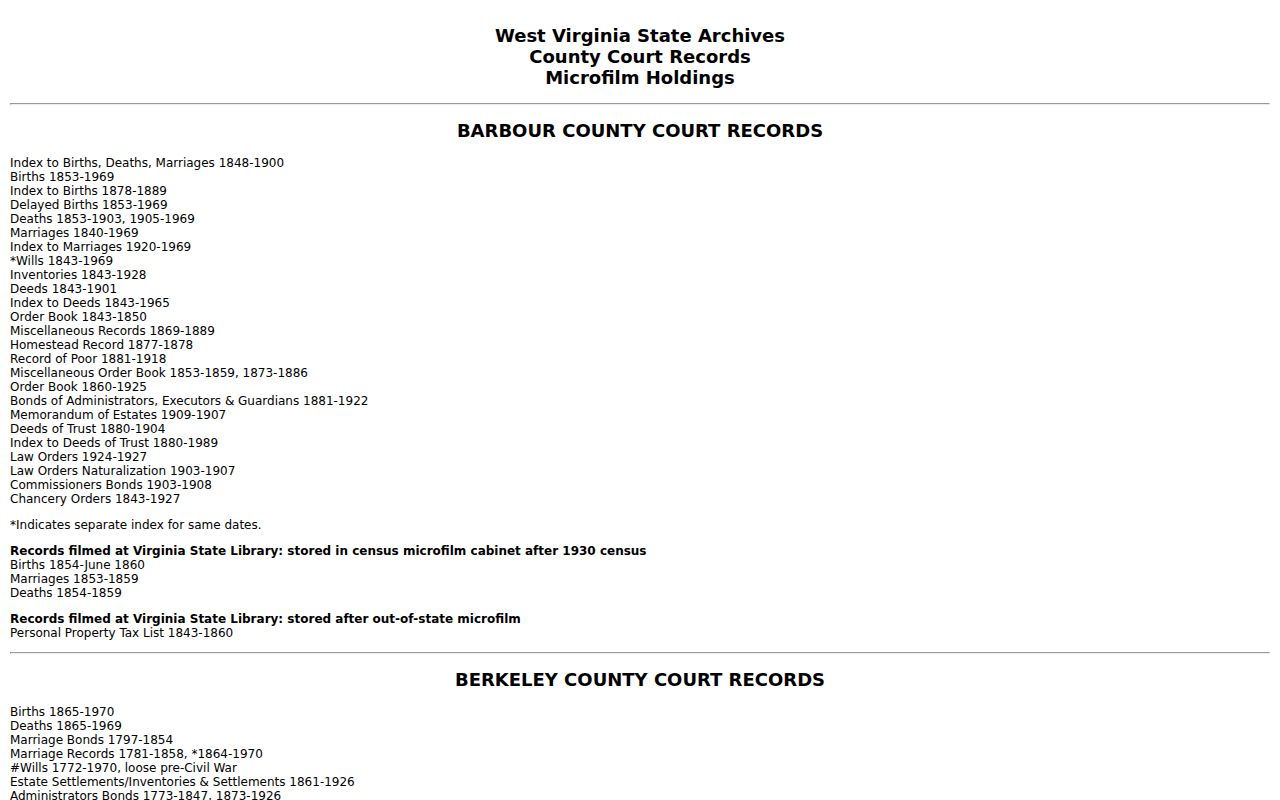
Treat the listed ranges as a pointer to the next collection, not as a promise of online coverage.
Grant County Clerk Books Bridge an IDX Gap
Grant County's online document index opens no usable search form for the public. The county publishes the link. The index fields, image access, and cutoff year for online deed records remain unclear. That leaves a gap the Clerk's office can fill. Call 304-257-4550 and ask for the general index by grantor and grantee. Or visit the counter in person. Bring whatever you have. An approximate recording year, a deed book and page, a parcel number, or a legal description helps the staff pin down the right entry fast.
At the courthouse, ask two things. Does the public terminal reach deeper into the deed records than the web link? And can you view the source book itself? Give the Clerk both names in a transfer, grantor and grantee, whenever possible. The link offers a route worth asking about. It is not a promise that every old deed opens online. The county labels it Grant County Clerk Document IDX Search.

Treat the endpoint as a first contact. If it will not load, request a counter or book search instead.
Grant County Transfer Records Have Different Lifespans
West Virginia's retention schedule treats deeds, trust deed books, assessment books, and delinquent-land books as permanent. Deed books stay forever. Transfer certificates are different. Each one lists the old owner, the new owner, and whether the change came by deed, judgment, or decree, yet the county keeps them only one year after the transfer. Lean on the deed or probate file instead. A transfer certificate will not be waiting. In 2024, a preservation grant gave Grant County $19,860 for roller shelving and record cabinets. That money stored deed and trust-deed books and protected estate and vital records. It was storage work, not digitization. The West Virginia Clerk retention schedule describes the permanent books, which explains why the counter and paper volumes remain part of the access path even where a county-linked index exists.
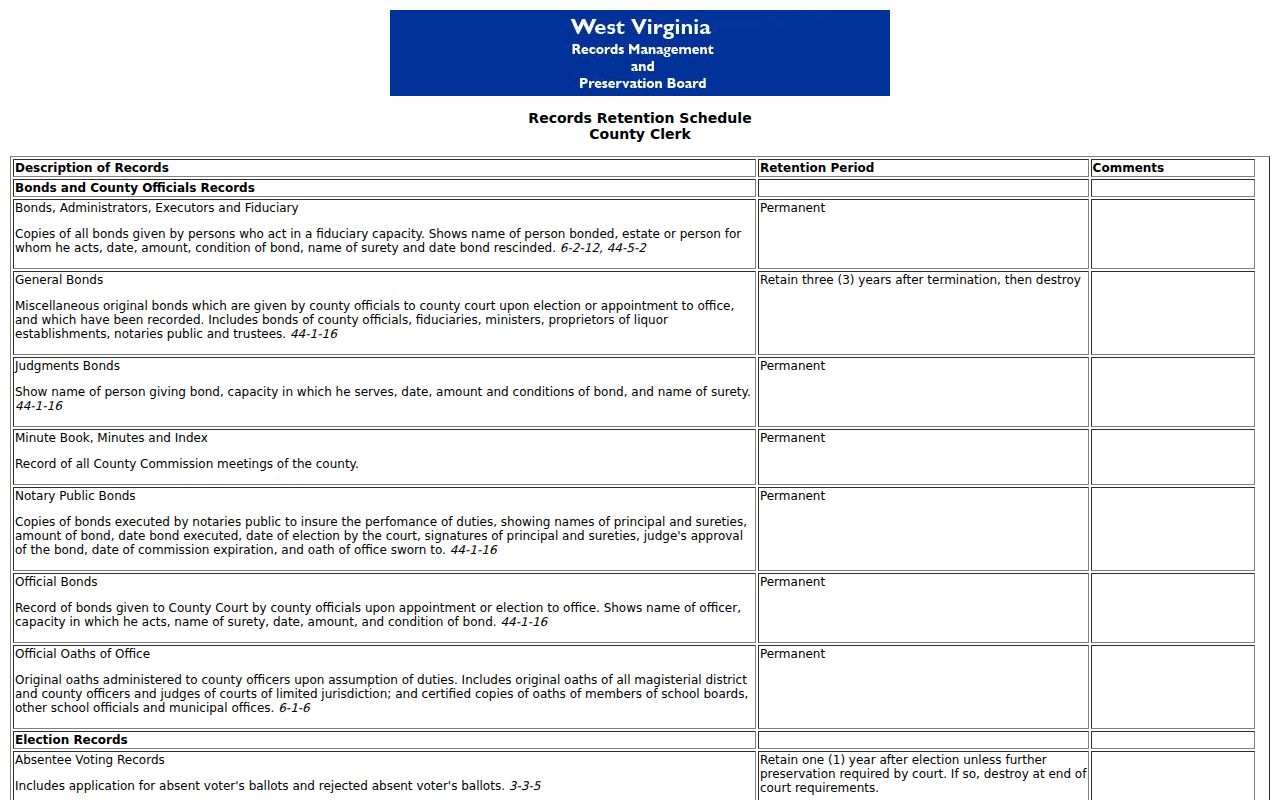
Ask for the record type that survives for the year in question, not only for a transfer certificate.
Read the Grant County Deed Chain in Reverse
Every recorded conveyance names a grantee who often becomes a later grantor. Follow that name backward. Confirm the legal description each time. It must still point to the same tract. A name alone will not carry the search, since two people can share a name, a company can rename itself, and an estate may appear through a fiduciary rather than the decedent.
- Copy the latest deed's grantee, grantor, recording date, book/page, and land description.
- Search the named grantor as a grantee in an earlier period.
- Compare acreage, adjoining owners, lot language, and parcel references to keep the same tract.
- Repeat through the general index, then use deed books or Archives microfilm where needed.
- Grantor
- The party who conveyed the interest in the instrument.
- Grantee
- The party named as receiving that interest.
- Chain of title
- The sequence of recorded transfers connected to a tract.
- Legal description
- The land wording used to identify the parcel, which may outlast a street address.
Grant County Probate Files Explain Estate Transfers
Death often moves land through probate or a fiduciary deed rather than a sale. The Grant County Clerk handles wills, estate administration, guardianships, and notices to heirs. Form ET 6.01 inventories real estate and probate property. The fiduciary files it within 90 days of qualification. ET 6.02 covers nonprobate personal property and is never recorded with the Clerk. Follow the will or estate file to the fiduciary. Then hunt a recorded fiduciary deed or deed of distribution. Archives holds Grant wills from 1866 through 1969 and fiduciary records from 1866 through 1929. Settlements span 1866 to 1882 and 1886 to 1913. Fiduciary accounts span 1863 through 1933. A death certificate can identify the person, but it does not convey title. Vital Registration date ranges appear on the state genealogy page. The referral to Archives appears there too.
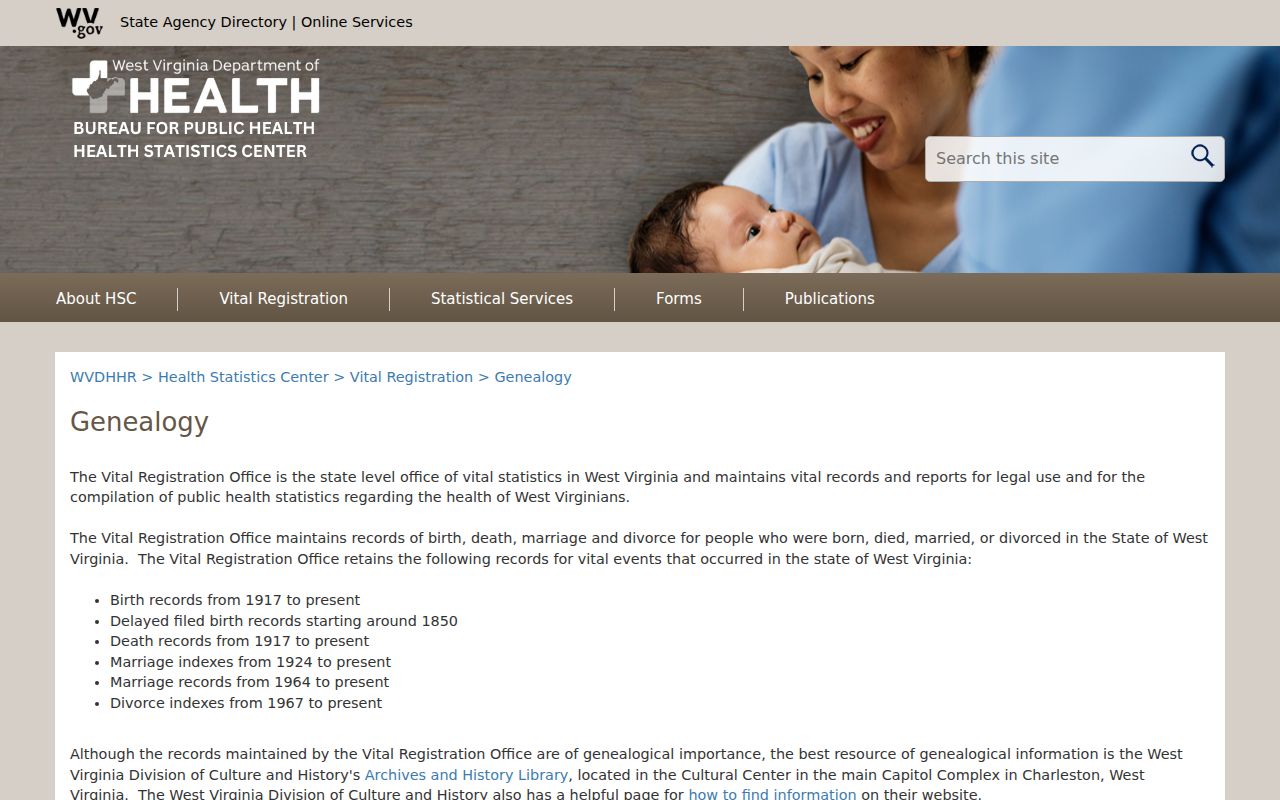
Use the vital record to pin down identity. The land instruments show how the interest passed. The West Virginia Vital Registration page lists copy fees, identification requirements, and mail or in-person instructions.

A certificate verifies a person or a date. The probate and land instruments document how the property interest actually passed.
Grant County Tax Deeds Need the Certificate Trail
Taxes can reshape ownership too. Unpaid real-estate taxes in Grant County turn delinquent on April 1. Names and amounts publish May 1. Under the 2025 SB 552 procedure, the State Auditor certifies unpaid 2024 taxes after October 31. The old November courthouse tax-lien sale no longer applies under that route.
Work splits between two offices. The Sheriff collects the bill and payment before certification. The State Auditor then runs certification, sale, redemption, and any unsold lands. Its land search covers certified-to-state and no-bid parcels. Searches run by county, district, map, parcel, ticket, certificate, taxpayer, purchaser, or status.
A certificate is only half the story. Trace the later deed in the Clerk's books. Tie it to the legal description before treating ownership as changed. The State Auditor land search is the place to start that certificate trail.
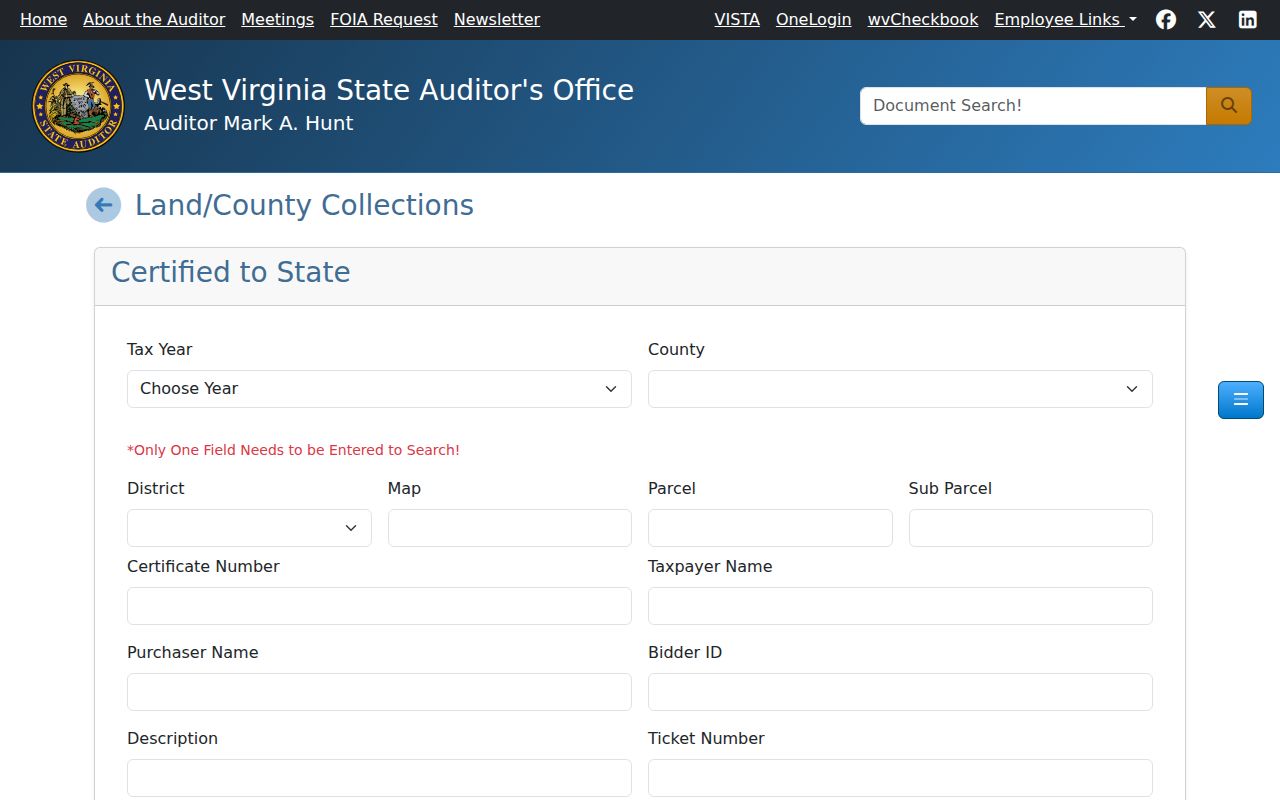
Before adding a tax-sale purchaser to the chain of title, trace the certificate forward to the recorded deed it produced.
Grant County Newspapers Add Older Place Names
Old newspapers often hold the clue a deed lacks. Moomau-Grant County Public Library keeps Grant County Press microfilm back to 1896. Legal notices there can surface an estate, tax sale, subdivision filing, road change, or parcel under a community name that no longer appears on maps. The Archives guide also points to Petersburg rail, flood, tannery, brick-factory, and store clippings. Plus a 1925 "History of Town of Bayard" item. Treat these as leads, not land-title proof.
Search by surname, town, old industry, route, or a legal-description phrase. Then use the notice date to pull the matching deed, probate, or court record. The library opens weekdays from 8 a.m. to 5 p.m. and closes weekends. So confirm microfilm service ahead of a visit. The local genealogy room is described at Moomau-Grant County Public Library.
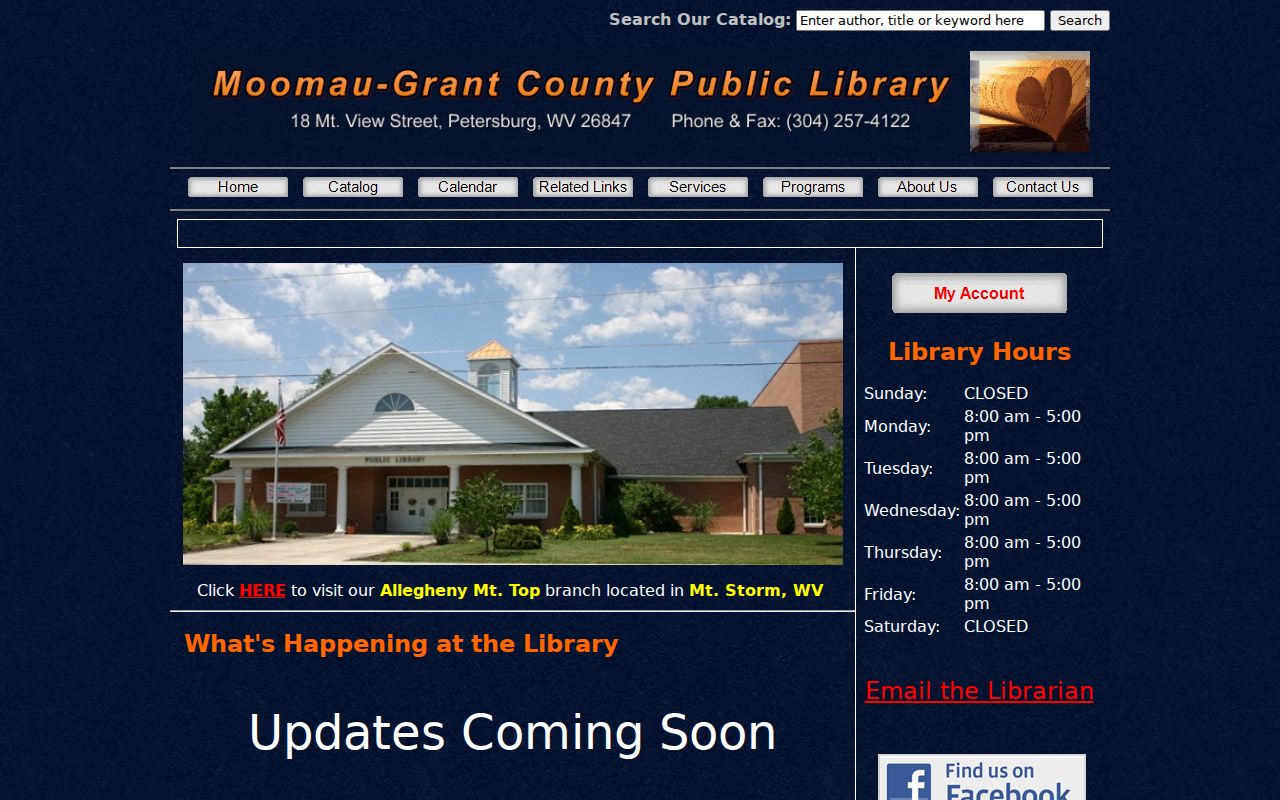
A vanished place name can unlock the legal description.
How Far Back Grant County Ownership Records Reach
Grant County deeds reach back a long way. The Archives finding aid lists deeds on microfilm from 1865 through 1908. It also shows a deed index from 1866 through 1969. Those spans describe the microfilm, not the limits of the County Clerk's current IDX. The Clerk publishes no stated online cutoff. No courthouse fire or loss of land books appears in county history. Ask the Clerk which current index carries the next year in the chain. Ask which permanent volumes carry it too.
Lawful use. Former-owner research in Grant County can support house history, an estate, or a property review. Do not use a name or address to track, threaten, or harass a living person.