
What Grant County Deeds Put on Record
Every Grant County deed puts certain facts on the record. It names the transferor and the recipient. It spells out the legal description and acreage, states the consideration, and shows the execution, acknowledgment, and recording date. Covenants or reservations appear too. West Virginia's retention schedule treats these as fields kept in permanent deed books. One caution applies. A recorded deed proves an instrument was filed, nothing more. It cannot rule out another lien, interest, or later transfer. So read the description and references as closely as the names.
| Deed Type | What It Does | Common Use |
|---|---|---|
| General or warranty deed | Conveys the interest and stated covenants | Ordinary conveyance record |
| Quitclaim deed | Conveys whatever interest the grantor holds | Interest transfer or correction |
| Fiduciary or executor deed | Shows an estate representative's conveyance | Probate-related transfer |
| Trustee, sheriff, or tax deed | Records a sale or transfer by a fiduciary or official | Foreclosure or tax process |
| Mineral deed, easement, or right-of-way | Conveys or burdens a defined interest | Separate land-use or mineral right |
Not every entry in a Grant County land index marks a sale. A deed of trust or mortgage secures a debt against land. An assignment shifts the secured party. A release or satisfaction shows that obligation was paid off. Liens, easements, and rights-of-way each sit in their own separate instrument. Read the index with that distinction in mind.
Grant County Clerk IDX Has a Verification Gap
The county website lists a link labeled "Grant County Clerk Document IDX Search." It points to an older address. That address does not render a usable public search form. The link stands as notice that a county index exists. It confirms nothing about search fields, coverage years, images, fees, or result limits. A missing web result is an access problem. It is not proof that no deed was filed.
Solve it with the custodian. Call or visit the Clerk. Bring a name, date range, book and page reference, parcel number, or legal description. Ask about a public terminal. Ask whether it offers a newer index. Also ask whether staff can run both grantor and grantee names. If an existing record is not posted, a written request under the West Virginia Freedom of Information Act can identify it. The Clerk need not build a new research list.
The county-linked entry sits at Grant County Clerk Document IDX Search.

A state snapshot of the endpoint shows only that it exists, not what a Grant County property search can query inside it.
Grant County Deed Books Remain Permanent
West Virginia's retention schedule calls deed books permanent holdings of the county clerk. Trust-deed books get the same standing. A single deed entry can carry a great deal: grantor, grantee, location, acreage, legal description, warranties, reservations, liens, consideration, execution, acknowledgment, and the estate conveyed. The recording date rounds it out. Trust deed books are leaner but still valuable. They list the grantor, trustee, property, secured debt, and covenants. A search result may give only a party name and a book reference. These expected fields tell you whether the full deed record is worth pulling.
Assessment books are permanent too, arranged by district and then by owner. Transfer certificates name the old and new owners of record. They state whether the transfer came by deed, judgment, or decree. But the schedule keeps them for just one year after the transfer. Delinquent-land books last forever. They record owner, acreage, location, and the delinquent years behind each tax bill. Federal and state tax liens stay on file until two years after release.
Read the West Virginia retention schedule for county book types and field descriptions.
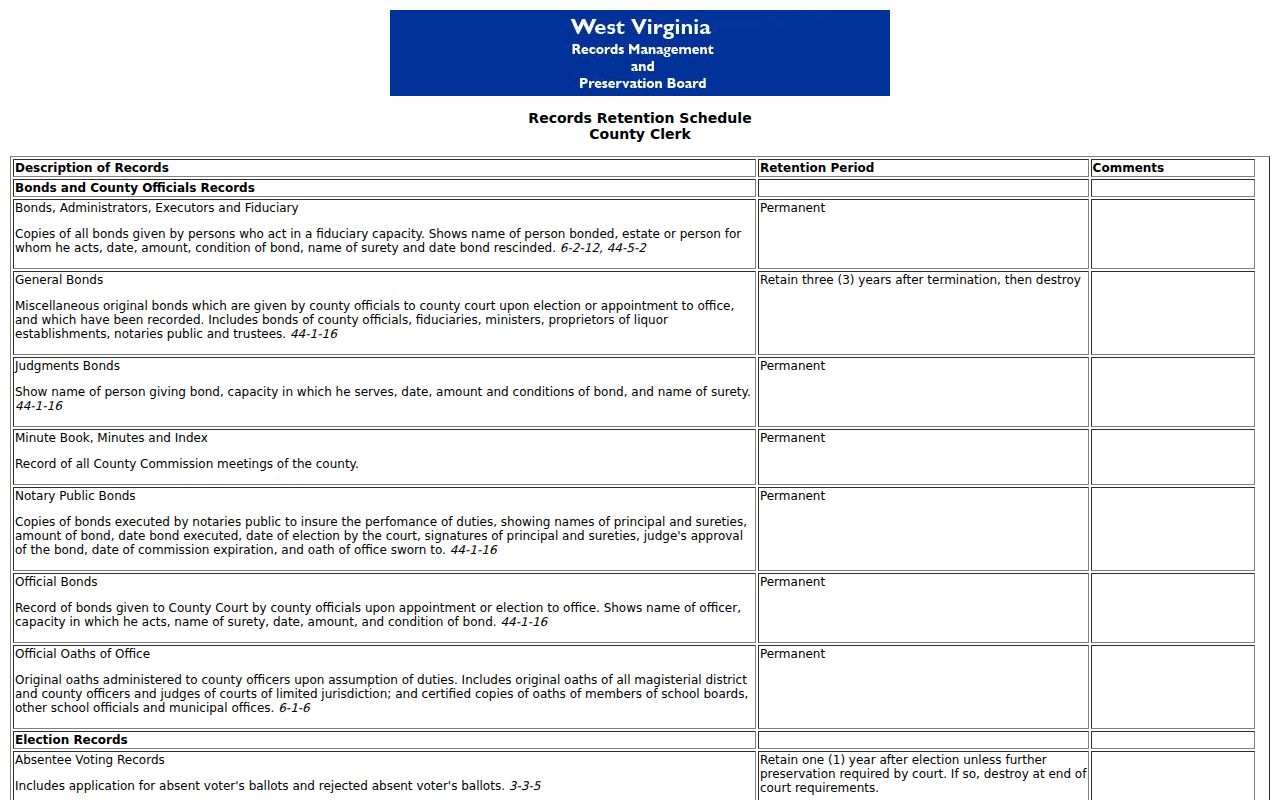
Give the Clerk the record name and its expected fields when you ask for an older Grant County volume.
Read the Grant County Names in Both Directions
A grantor conveys the interest and a grantee takes it. Chain building in Grant County works backwards. Start with the newest deed for the tract. Then note its grantee, legal description, date, and book and page. Search that grantee as a grantor to reach the next earlier transfer, and repeat. Spelling drift, marriages, estates, and company name changes can all break a simple name search. Pair every name with the tract description and date before trusting the link.
- Locate the latest deed and copy its grantor, grantee, recording date, and land description.
- Search the grantor's name as a grantee in an earlier period.
- Compare acreage, tract wording, and adjoining references before treating it as the same parcel.
- Repeat backward, using the Clerk's general index and deed books if an online entry is unavailable.
- Grantor
- The person or entity that conveys the stated interest.
- Grantee
- The person or entity that receives the stated interest.
- Chain of title
- The sequence of recorded transfers tied to one tract.
- Book and page
- A volume and page reference used to locate a deed book entry.
Grant County Deed Records Reach into Microfilm
Deed records in Grant County stretch back well beyond anything searchable online. The West Virginia Archives finding aid lists microfilmed deeds covering 1865 through 1908. It also lists a deed index running from 1866 to 1969. Those are archival holdings you can consult directly. The Clerk's office holds the current electronic records. Its imaging start year is not published. A property chain may reach back earlier than the online entries. Let the Archives years guide you. Ask the Clerk for general indexes and deed books to bridge the gap in the property records.
| Record set | Verified years | Where to ask |
|---|---|---|
| Grant deeds on microfilm | 1865-1908 | West Virginia Archives |
| Grant deed index on microfilm | 1866-1969 | West Virginia Archives |
| Current Clerk IDX | Online coverage not verified | Grant County Clerk |
Grant County formed in 1866. The earliest deed film begins just before county organization. A parcel number search will not reach that far back. For a deed predating or following the film run, ask whether a deed book or general index exists. A later archival copy may also cover the gap. The Grant County Archives finding aid lists the deed and deed-index span.
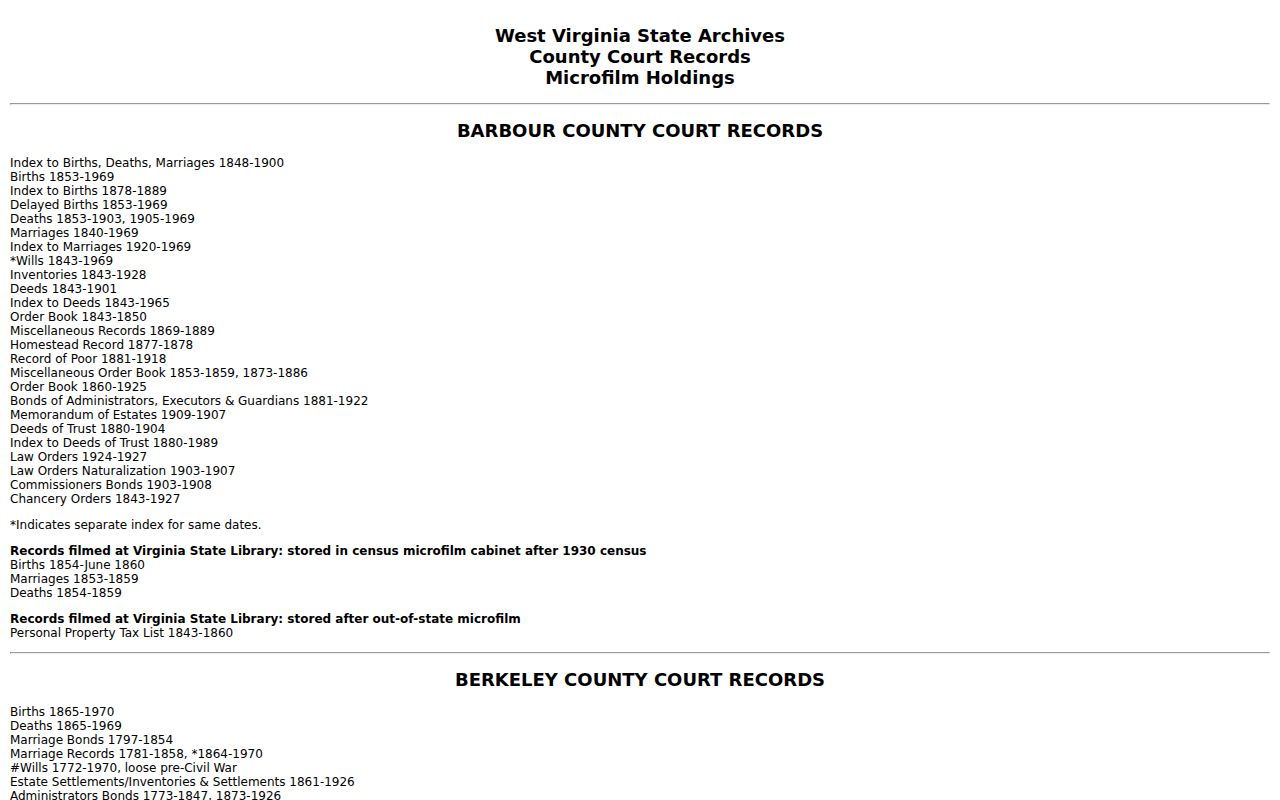
Use the date range to figure out which office or collection holds the next link in the chain. The right holder often depends on the era of the deed.
Separate Grant County Deeds from UCC Filings
Not every recorded instrument is a deed. Mortgages and deeds of trust sit in County Clerk land records alongside assignments, modifications, releases, satisfactions, and partial releases, and the index lets you search owner, lender, trustee, contractor, or legal description. A release can lag for years behind the security instrument it satisfies. Federal tax liens, state tax liens, and judgment liens may require a search of both the Clerk's records and the court docket.
A UCC filing is another animal. A financing statement covers personal property. It is a state-level record, not a substitute for a real-estate deed-of-trust search. The West Virginia Secretary of State's search takes a debtor name, secured party, or filing number. Filings since 2018 are online only. Fees run $10 initially, $1 per page, and a $3 portal fee. Manual searches stopped after February 26, 2018.
Use the West Virginia UCC filing instructions to keep the state record straight from a land instrument.

A UCC entry adds business-collateral context, not parcel ownership.
Grant County Deed Records May Follow a Court File
Some Grant County deeds have a courtroom behind them. A foreclosure, partition, quiet-title case, judgment lien, or tax process can change ownership of land without ever looking like a simple sale deed. Search the statewide circuit and magistrate record-access tools first. The circuit landing page exposes no search fields, so pleadings, exhibits, orders, and sale confirmations come from the Grant Circuit Clerk. Magistrate search works differently. It takes a name or case number. It returns up to 30 results and posts no documents online.
Estates can interrupt a name chain too. The County Clerk holds wills, fiduciary files, and the ET 6.01 real-estate appraisement. Fiduciaries file an inventory within 90 days. Older wills, estates, order books, and chancery records sit on Archives microfilm, so search the probate file and then the recorded fiduciary deed or other transfer instrument. The Grant County former-owner chain uses the same records.
For court search modes and copy limits, begin with West Virginia Court Record Access.
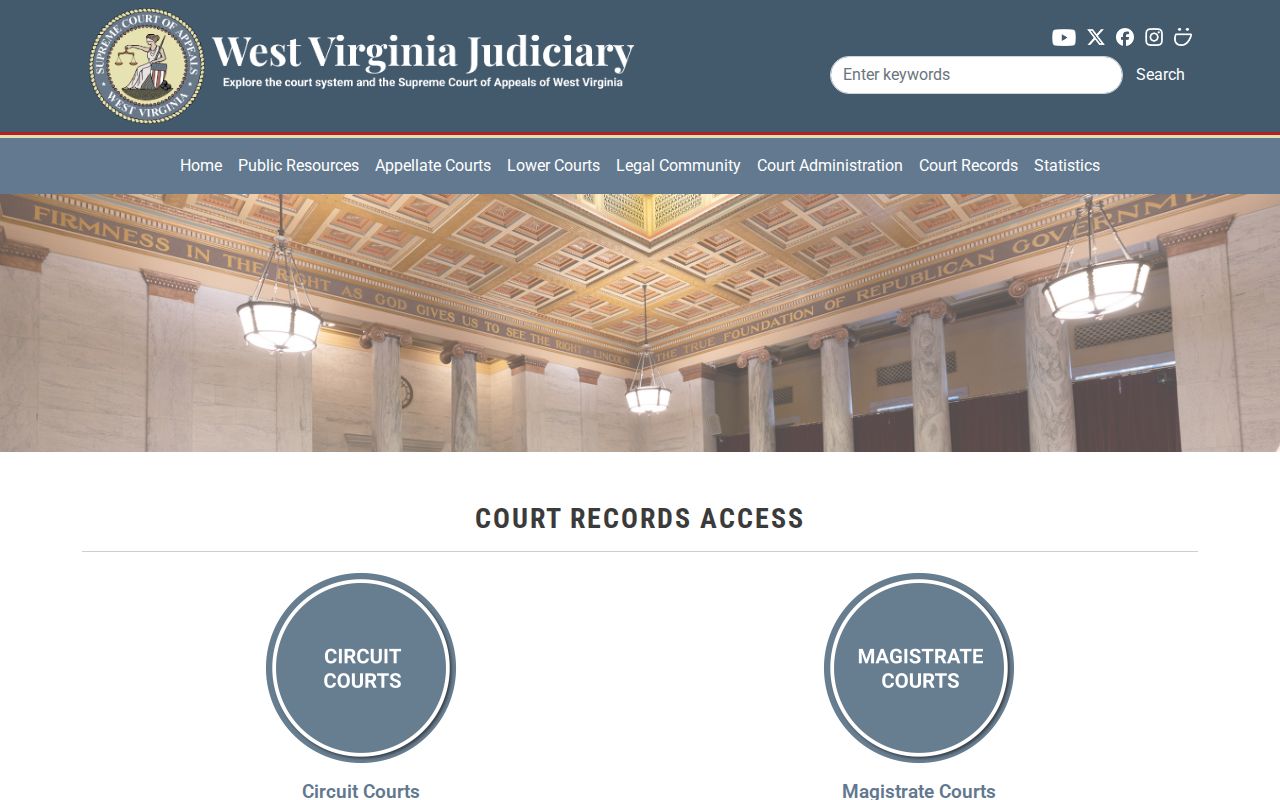
Use the court index to find the case. The controlling document comes from the proper clerk, and the magistrate search rules appear at the state search instructions.
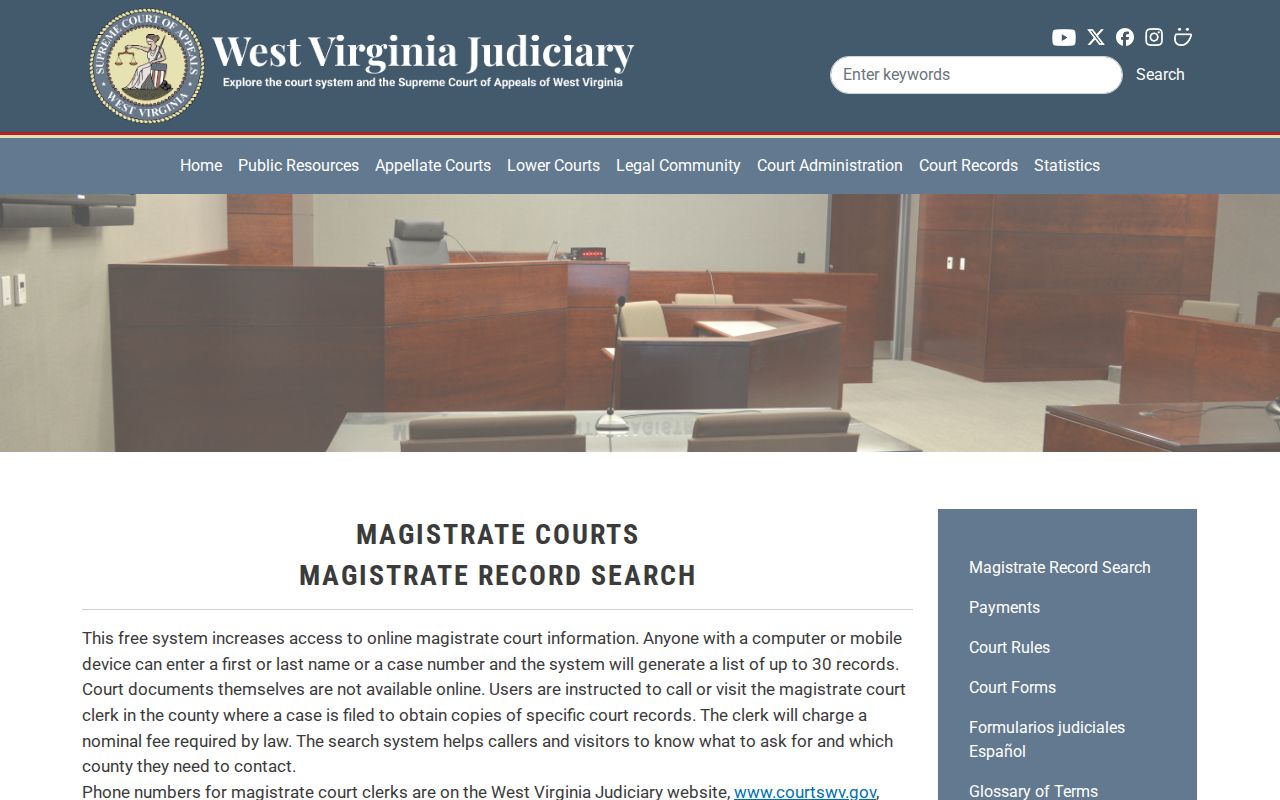
The magistrate result gives a case number only.
Request a Grant County Deed Copy
The Grant County Clerk keeps deed records at 5 Highland Avenue in Petersburg. Reach the office at 304-257-4550 or county.clerk@grantcountywv.org. The Clerk's page links a Document IDX search. The online form is unreliable, though. Treat the web tool as a starting point rather than a complete index. Image access, result limits, and copy fees are not published online. Hours are not listed either. Call before you visit.
When you contact the Clerk about a deed, bring as much detail as you can. Grantor and grantee names matter most. Add an approximate recording year. Add the book and page or instrument number. Add the legal description if you have it. Ask two practical questions. Does the public counter terminal hold a fuller deed index than the web version? Are plain and certified copies both available? No county fee schedule is published online. Confirm the per-page and certification charges directly with the Clerk before mailing any payment.
For records missing from the online index, narrow the request in writing. List the parties, the approximate date, the instrument type, and any book and page clue. The West Virginia Freedom of Information Act, W. Va. Code § 29B-1-3, generally requires the custodian to respond within five days. Weekends and legal holidays are excluded. The Act allows actual reproduction charges but not staff search time. It also does not obligate the Clerk to build a title report. Nor must the Clerk build a new index for you.
Recorded, not guaranteed. The Grant County land index shows instruments that were recorded, not a title opinion. A title professional checks the chain and possible gaps before a conveyance decision.